


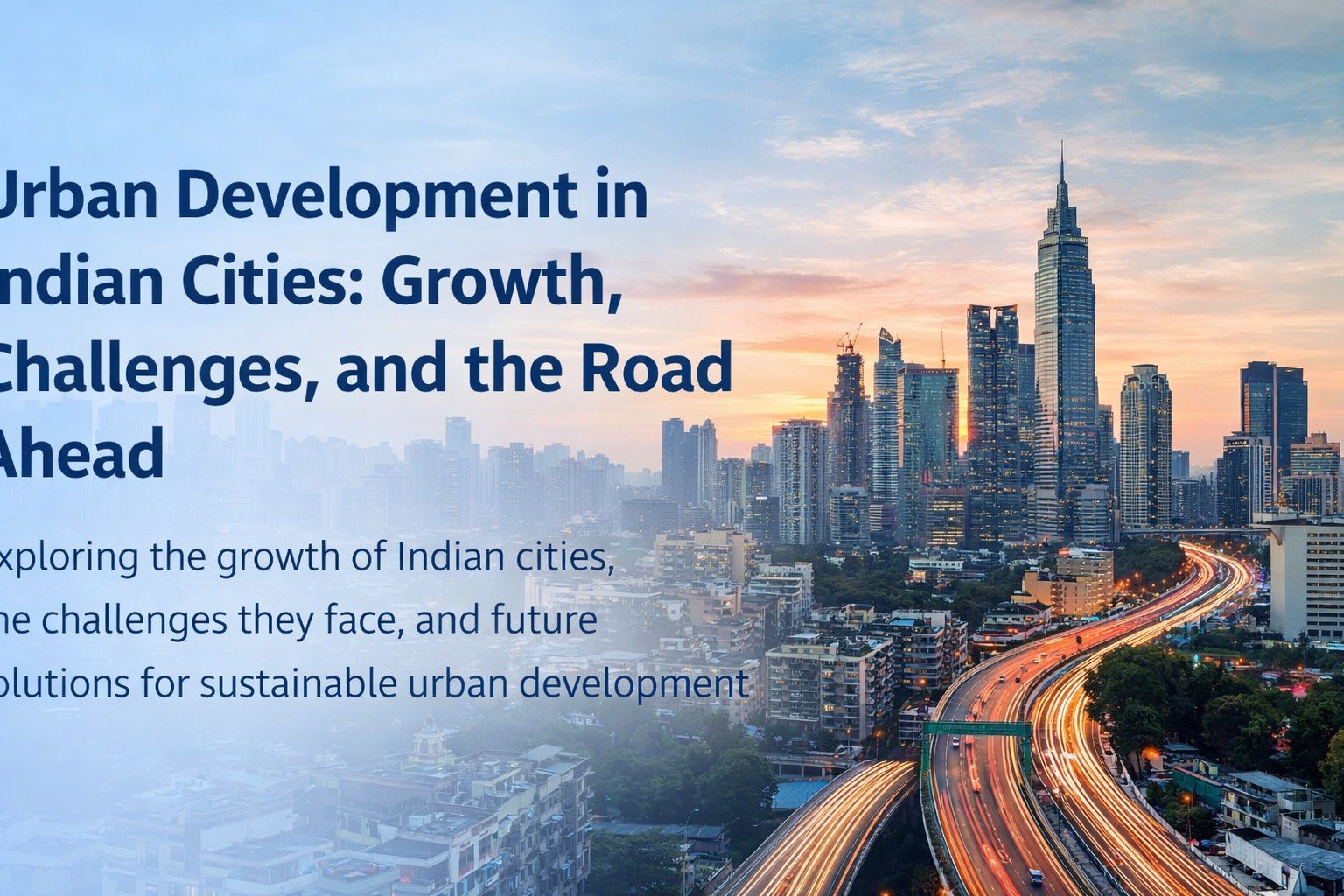

India’s cities are expanding at an unprecedented pace. From metropolitan hubs to emerging urban centers, urban development in Indian cities has become a defining factor in the country’s economic growth and social transformation. However, this rapid expansion brings both opportunities and serious challenges.
Urban development focuses on improving infrastructure, housing, transportation, sanitation, and public services. Cities such as Delhi, Mumbai, Bengaluru, and Hyderabad have witnessed massive investments in metro rail projects, smart roads, digital governance, and public amenities. These initiatives aim to improve mobility, reduce congestion, and enhance overall living standards.
At the same time, unplanned growth remains a major concern. Overpopulation, traffic congestion, air pollution, water scarcity, and inadequate waste management continue to affect urban life. Many cities struggle to balance modernization with sustainability, often putting pressure on natural resources and public infrastructure.
Affordable housing is another critical issue. As cities grow, land prices rise, making it difficult for middle- and lower-income groups to access decent housing. Urban planners and policymakers are increasingly emphasizing inclusive development models that prioritize affordable housing, green spaces, and efficient public transport systems.
The future of Indian cities depends on smart planning, citizen participation, and sustainable policies. By integrating technology with human-centric design, urban development can transform cities into resilient, livable, and environmentally responsible spaces.